Let’s talk tyres — specifically, tubeless tyres. They’ve been around for years, quietly transforming rides, saving you from roadside meltdowns, and (if we’re being dramatic, which we are) changing lives… oh, and it’s 2025.
Before we get into why tubeless might just be your next upgrade, here’s how they stack up against the other two main tyre types:
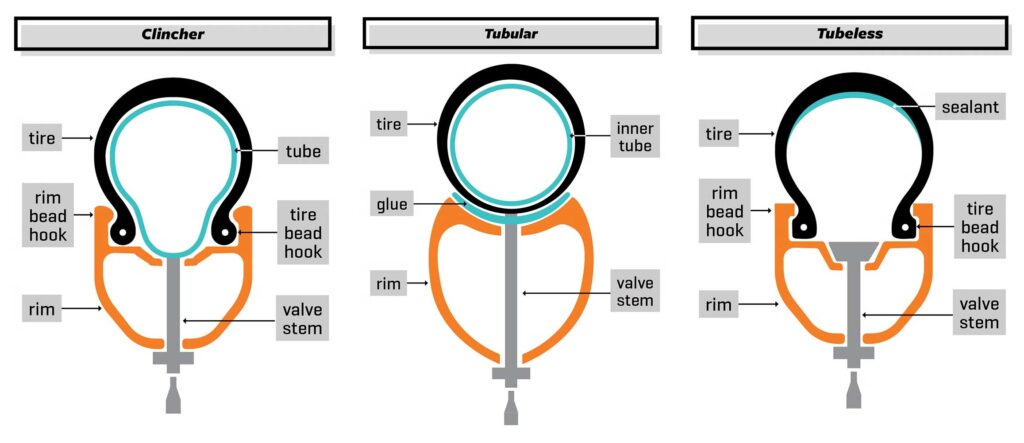
- Clincher – The most common type, with an inner tube inside the tyre. Simple, widely available, easy to fix… but also easy to puncture, and pinch flats are a regular annoyance.
- Tubular – The old-school pro racing choice. The tyre and tube are sewn together and glued to the rim. They ride beautifully, but changing one mid-ride is about as practical as carrying a spare wheel in your jersey pocket.
- Tubeless – The best of both worlds. No tube, lower pressures, self-sealing puncture protection, and better grip. A little more fiddly to set up, but once it’s dialled in, it’s a game changer.
So what’s the big deal? In simple terms, tubeless tyres ditch the inner tube. Instead, you’ve got a tyre, a rim, some special rim tape, a tubeless valve, and the magic ingredient: sealant. Sealant is the glue that holds you and your life together. Inside your tyre, the sealant will automatically plug small punctures before you even know they happened. It’s like having a tiny mechanic living inside your wheel.
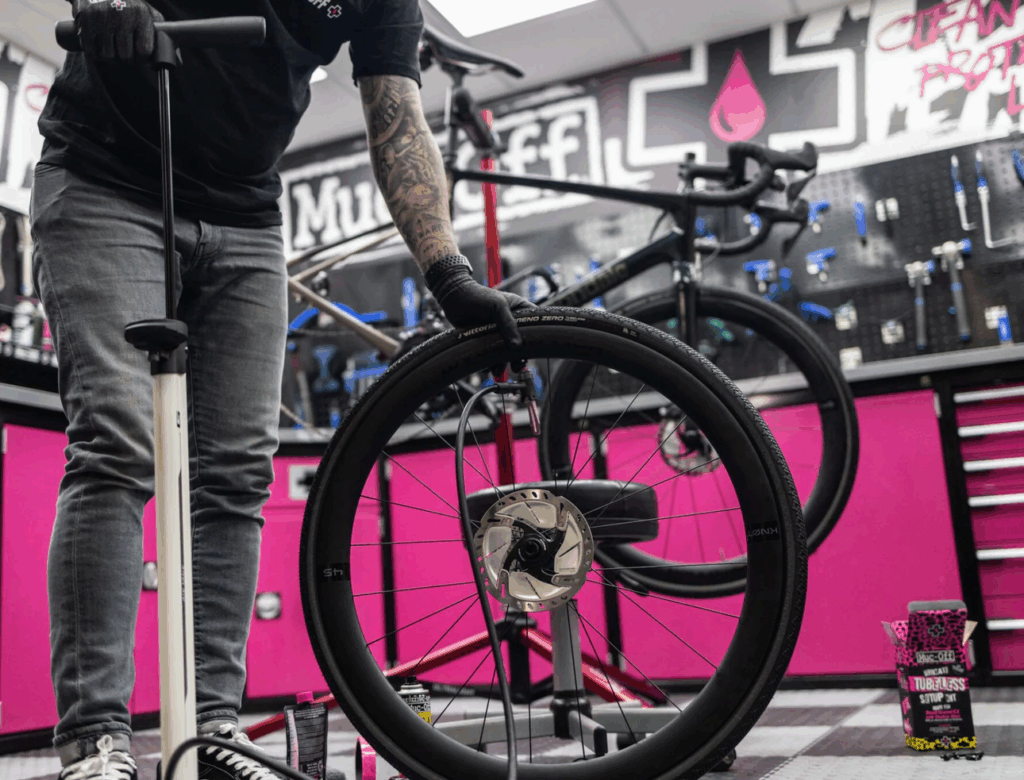
As someone who was late to the whole tubeless set up and was sick of being asked “here mate, you running them tubeless like?” – I was dubious at the start, on how a good old inner tube would become my number two choice of how I would run (well cycle) my wheels. Turns out I should’ve been “running” them tubeless a LONG TIME AGO!
The Perks of Going Tubeless
- Puncture Protection Without the Drama
Forget standing at the side of the road, pretending you know how to use tyre levers while your friends disappear into the distance. With sealant sloshing around in there, most small punctures seal instantly. Not even joking. - Lower Pressure, Better Grip
Because there’s no tube to pinch, you can run lower tyre pressures without fear of pinch flats. This means more tyre on the ground, more grip in corners, and a ride that feels less like rattling over cobblestones and more like gliding on velvet. - Rolling Faster, Feeling Fresher
Without the friction of a tube inside, you get slightly lower rolling resistance. Translation: a touch more speed and efficiency which is handy when you’re trying to get past that 60 odd year old bloke at your local 10 mile TT. - A Comfier Ride
Lower pressures = more cushioning. On rough gravel or rooty singletrack, you’ll notice the difference. Your wrists and backside will thank you.
The Slightly Less Glamorous Side (Arron King’s Nightmare)
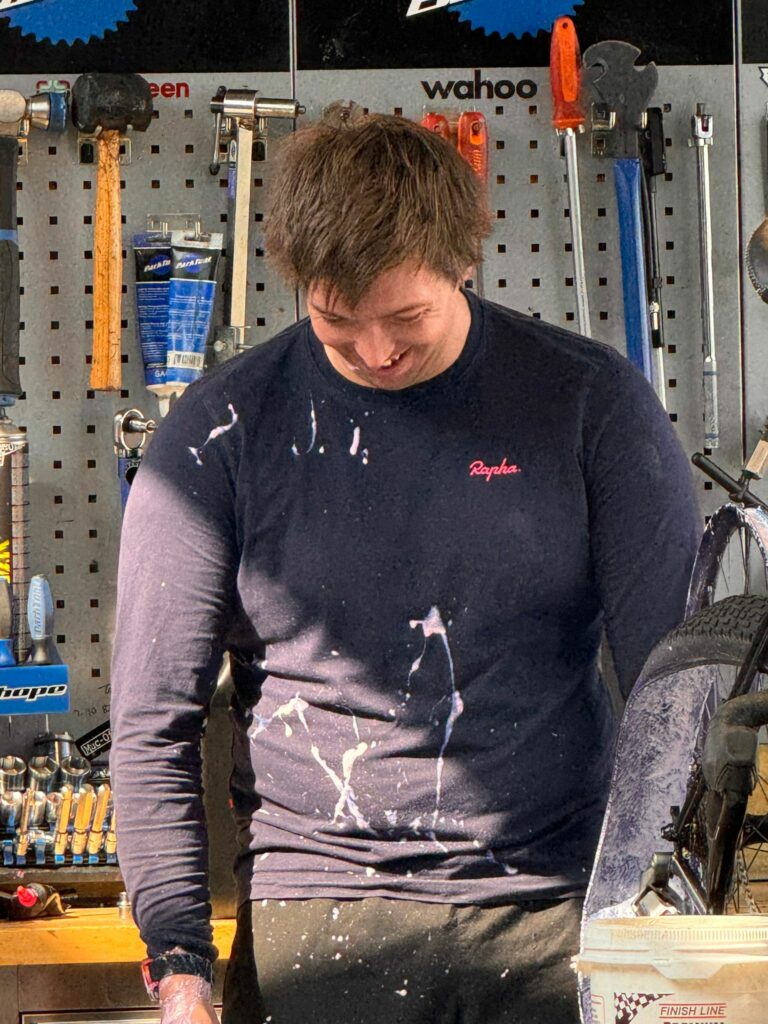
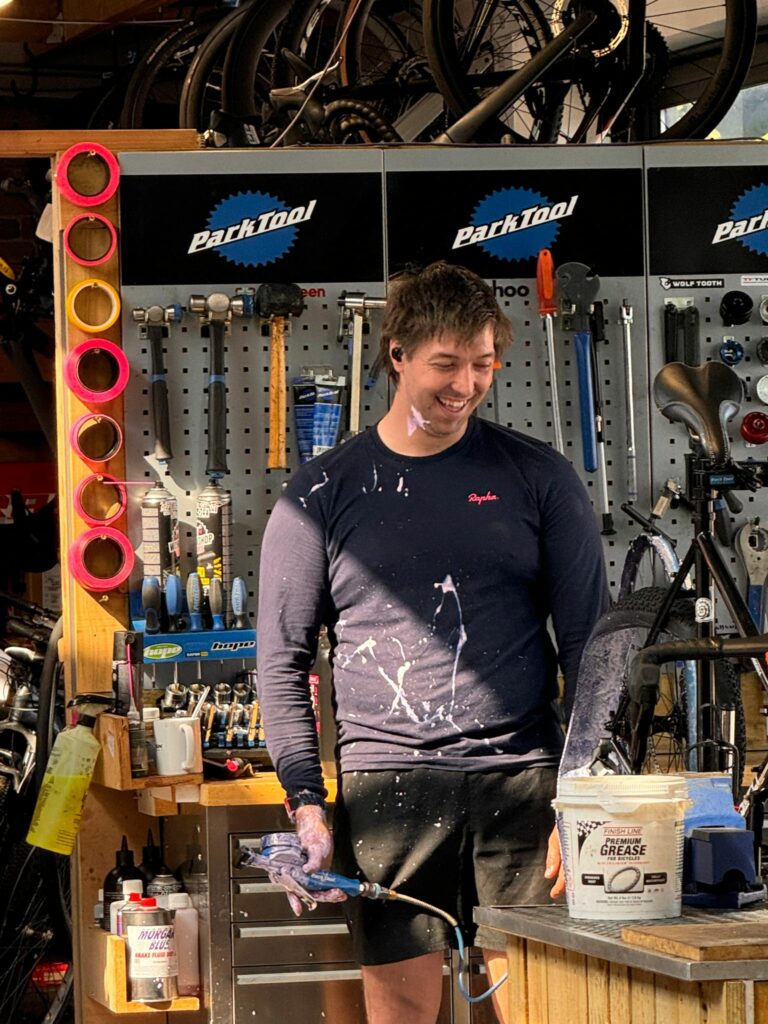
Look, we’re not going to pretend tubeless is all sunshine and PR-winning smiles.
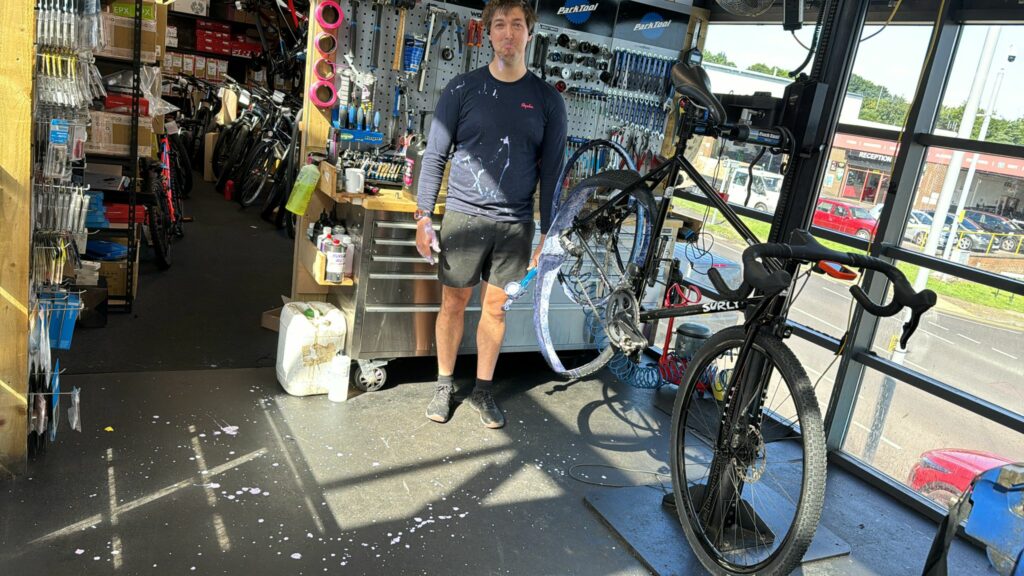
- It’s Messy — Sealant can and will get on your hands, your floor, and probably your dog.
- It Needs a Bit of Know-How — Seating a tyre can require an air compressor and some patience (and maybe a few colourful words). You can get away with using a CO2 canister, or there are quite a few track pumps which have a handy feature which blasts the air in.
- Maintenance Matters — Sealant dries out over time, so you’ll need to top it up every few months.
- Not Invincible — Big holes still mean you’ll be reaching for a tyre plug, and in some cases, an….erm…inner tube. Far better be raggin’ that wheel off for just the big ones, rather than
So… Worth It?
If you ride regularly, value comfort, hate punctures, and want better performance, then yes tubeless tyres are absolutely worth a look. Once you’ve gone tubeless, it’s hard to go back. The ride feels better, you’ll spend less time fixing flats, and you’ll secretly start feeling like a bit of a pro (even if you’re just cruising from Langley Park to Lanchester).
And if you’re still unsure? Swing by Team Cycles at Gateshead or Kielder. We’ve got tubeless-ready bikes in our hire fleet, and we’re always happy to chat about upgrades. You might even get a coffee while you’re here.