Compare the Shimano & SRAM groupset hierarchy, from Dura-Ace to Claris and Red to Apex. Discover their differences, and which is best for your ride.
Last updated: November 2025 – with all guidance and advice from our knowledgeable and experienced team
When riders start comparing bikes, the Shimano vs SRAM debate always comes up – especially when they notice mysterious words like 105, Ultegra, Dura-Ace, Rival, and Red printed on the components. So, what’s the difference? Does the groupset hierarchy actually matter, or is it just bike-shop jargon?
What is a Groupset?
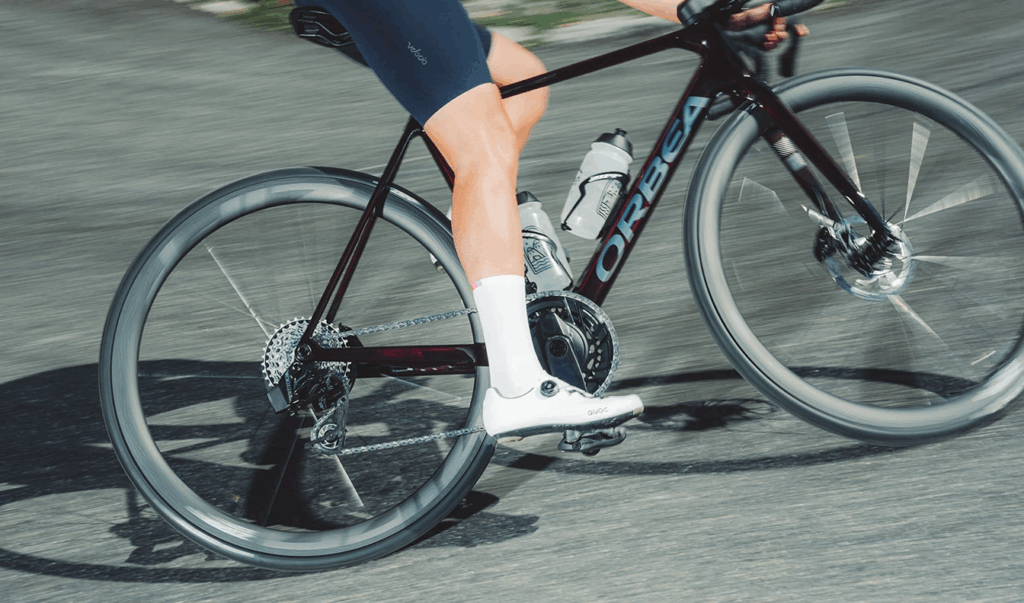
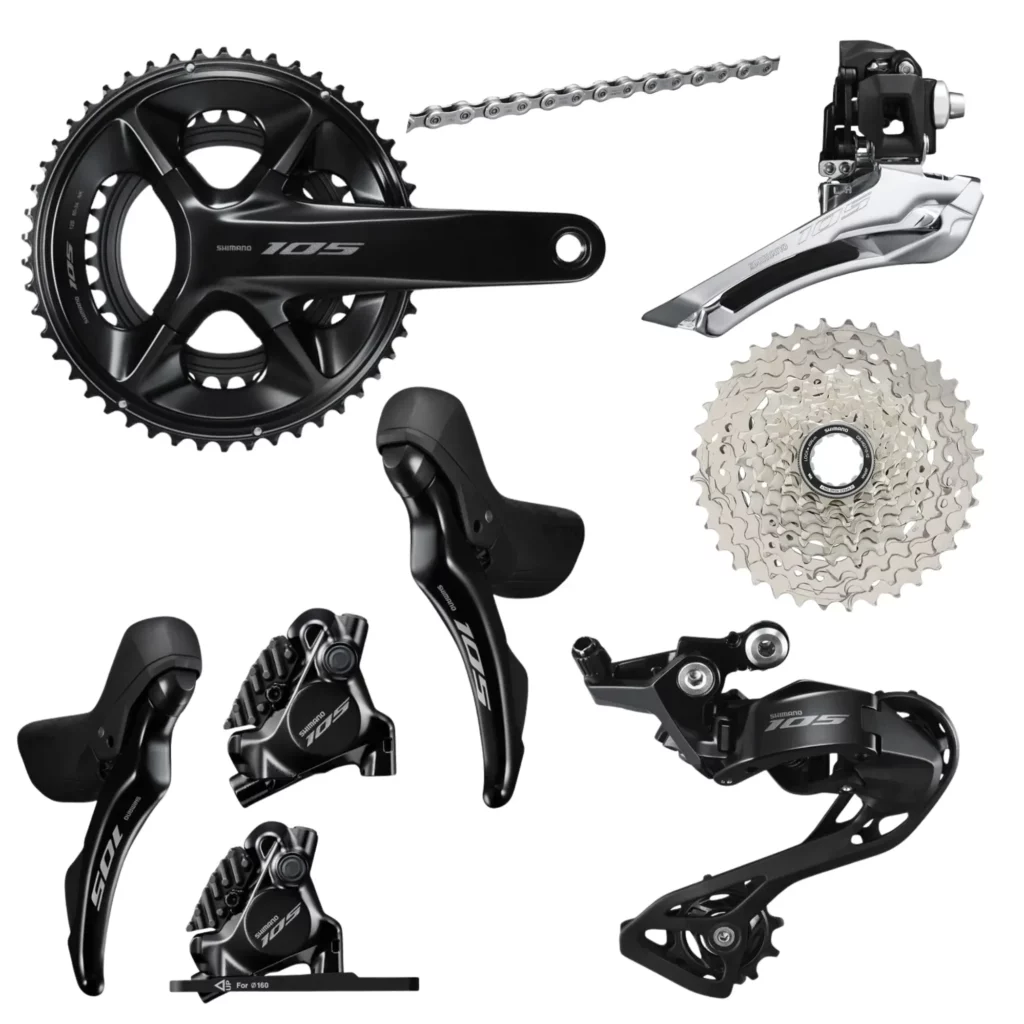
A groupset, is the collection of drivetrain and braking components that make your bike shift, stop, and go. Minus the braking aspect of a groupset, think of it like the gearbox for your car. It includes a crankset, cassette, chain, derailleurs, shifter and, brakes! It’s the symphony that turns leg flailing into smooth motion. And just like a symphony, some groups are more “Beethoven,” others are more “school recorder concert.”
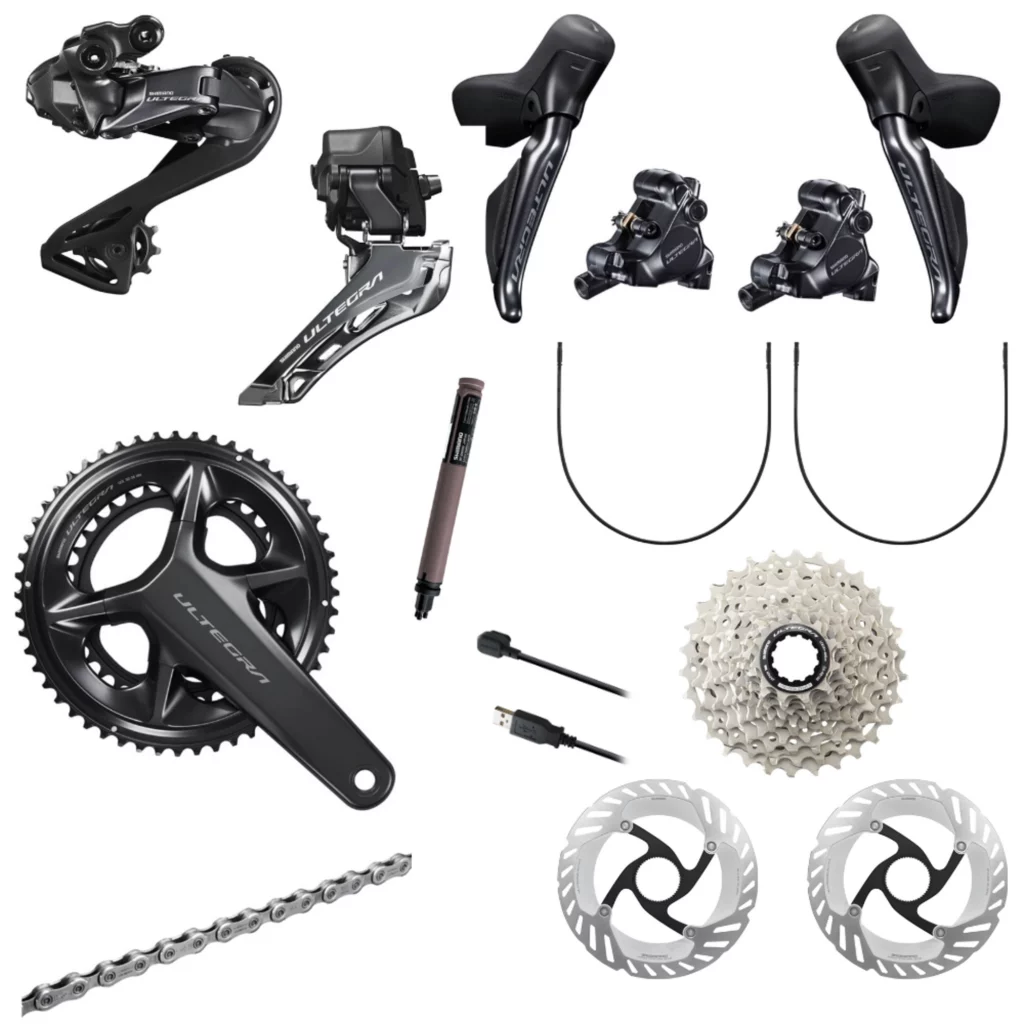
Shimano Groupset Hierarchy Explained
The Shimano groupset ranking system follows a simple pattern: the smaller the number, the higher the performance tier.
Here’s how the Shimano groupset hierarchy stacks up for road cycling:
1. Dura-Ace – The flagship 12-speed groupset built for professional racers. Lightweight, ultra-precise, and now fully electronic (Di2).
2. Ultegra – The sweet spot for serious cyclists, offering near-identical performance to Dura-Ace at a more approachable price.
3. 105 – Performance and value combined. Now available as 105 Di2, it brings electronic shifting to a broader audience.
4. Tiagra – Reliable and smooth 10-speed setup for training bikes and enthusiasts.
5. Sora – Ideal for entry-level riders seeking consistent performance.
6. Claris – Shimano’s most affordable 8-speed option, perfect for casual riding and commuting.
Shimano also offers the GRX series, purpose-built for gravel bikes, sharing technology with road groupsets but with gearing optimised for mixed terrain.
Shimano is the classic. Think Toyota Hiace (or Volkswagen Transporter – IYKYK): reliable, everywhere, and always works even when you’ve neglected it a bit. On the floor right now, we’ve got bikes running Shimano Claris and Sora, which are perfect starter setups. They shift, they brake, they let you ride without blowing your budget. Sure, you only get 8 or 9 gears, but more gears just means more ways to pick the wrong one anyway. Am I right?…guys….guys!?!
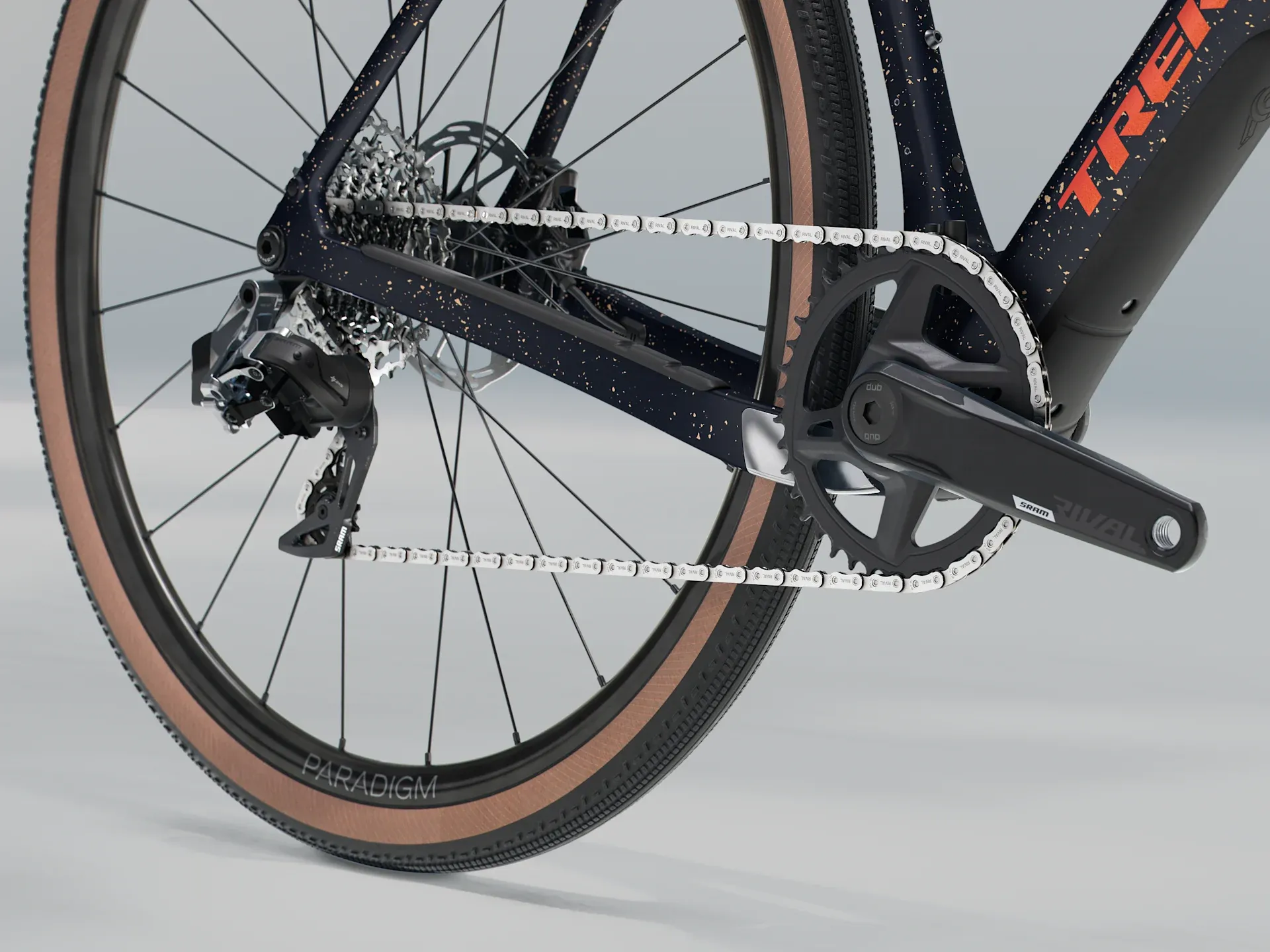
But here’s where things get spicy: Shimano 105. If there’s a sweet spot for riders who actually like their bikes but don’t want to re-mortgage the house, this is it. We’ve got a couple of road bikes in stock with 105 Di2….yep, the electronic shifting version. Tap a button, and it’s smoother than your mate Steve trying to order craft beer. Rival AXS from SRAM sits in the same bracket: wireless, sleek, and yes, we’ve got it on a gravel build in the shop if you want to ride the “fighter pilot” feel.
SRAM Groupset Hierarchy Explained
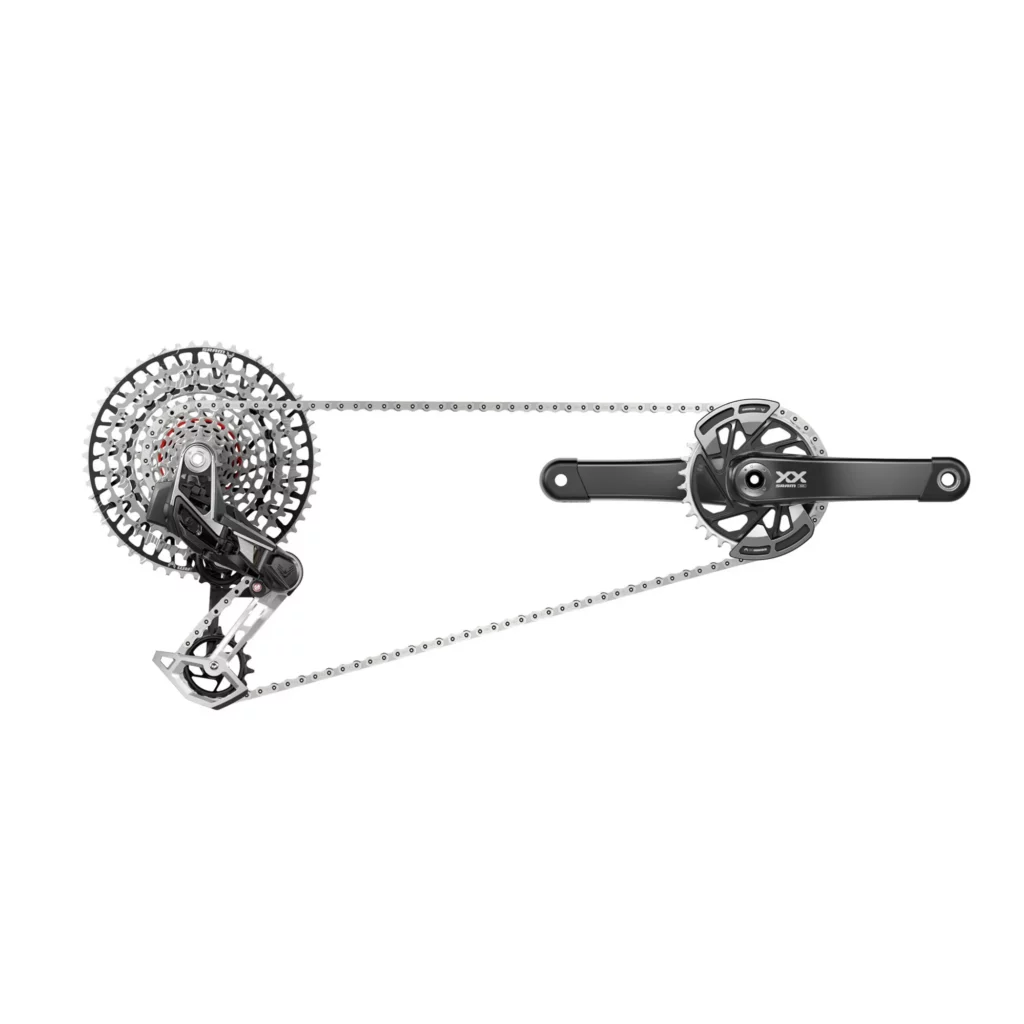
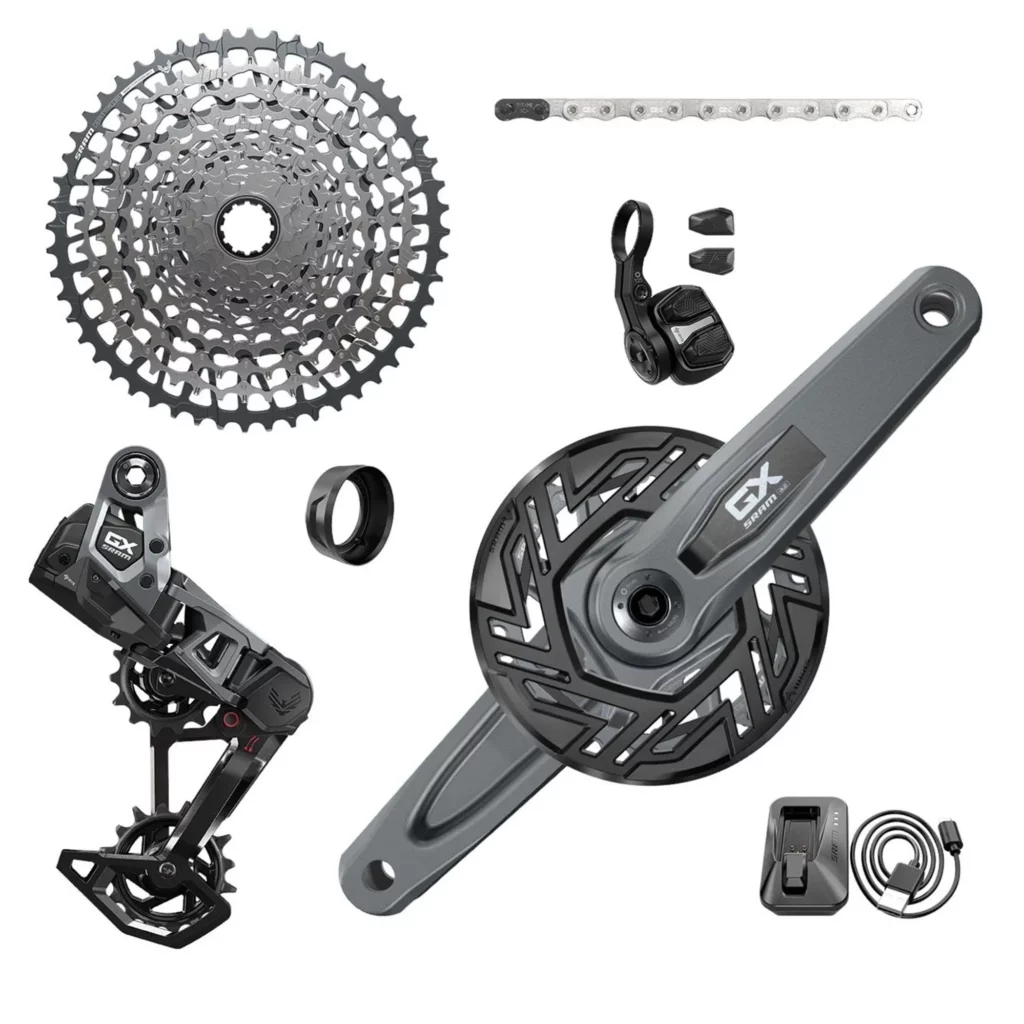
The SRAM groupset hierarchy uses names rather than numbers, but the principle is similar: more advanced materials and tech as you move up the ladder.
What you need to know about the SRAM groupset hierarchy:
1. Red AXS – The ultimate 12-speed, fully wireless groupset. Feather-light and pro-level performance.
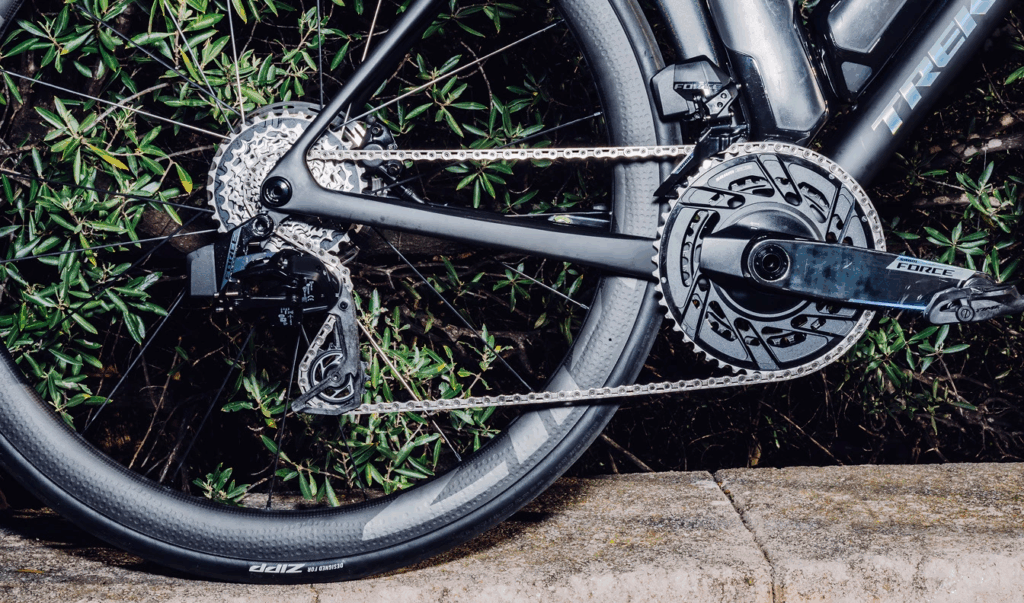
2. Force AXS – Shares much of Red’s performance with minimal weight gain – perfect for competitive riders.
3. Rival AXS – Excellent balance of cost, weight, and wireless tech, making it a popular mid-tier choice.
4. Apex AXS / Apex – Reliable 12-speed mechanical or wireless for riders on a budget or tackling gravel adventures.
SRAM’s XPLR and Eagle variants extend into gravel and MTB, offering wide-range cassettes and 1x drivetrains for simpler, chain-secure setups.
Shimano vs SRAM – Which Groupset Is Best?
When comparing SRAM vs Shimano, it’s not just about price or weight – it’s about feel. Shimano shifting is known for its silky smoothness and mechanical precision.
SRAM provides crisp, tactile, and fully wireless shifting in its AXS systems. For gravel and endurance bikes, Shimano’s GRX and SRAM’s XPLR both excel, each offering wide gear ranges and excellent braking power.
Ultimately, both brands produce world-class groupsets across all price points. Your choice comes down to riding style, budget, and preference.
Choosing Your Next Groupset
If you’re new to cycling, Shimano 105 or SRAM Rival are perfect gateways into performance riding. For riders chasing every watt, Ultegra Di2 or SRAM Force AXS deliver electronic precision.
Whether you’re after a Shimano groupset upgrade or curious about SRAM’s wireless tech, our experts at Team Cycles can help you find the setup that fits your goals.
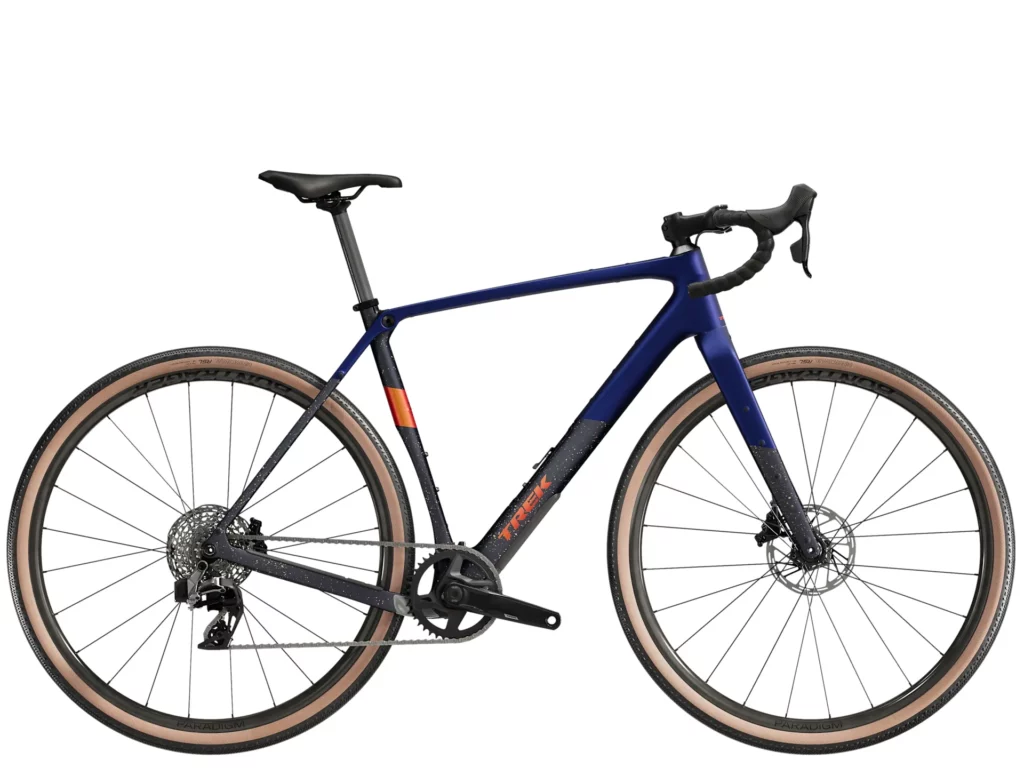
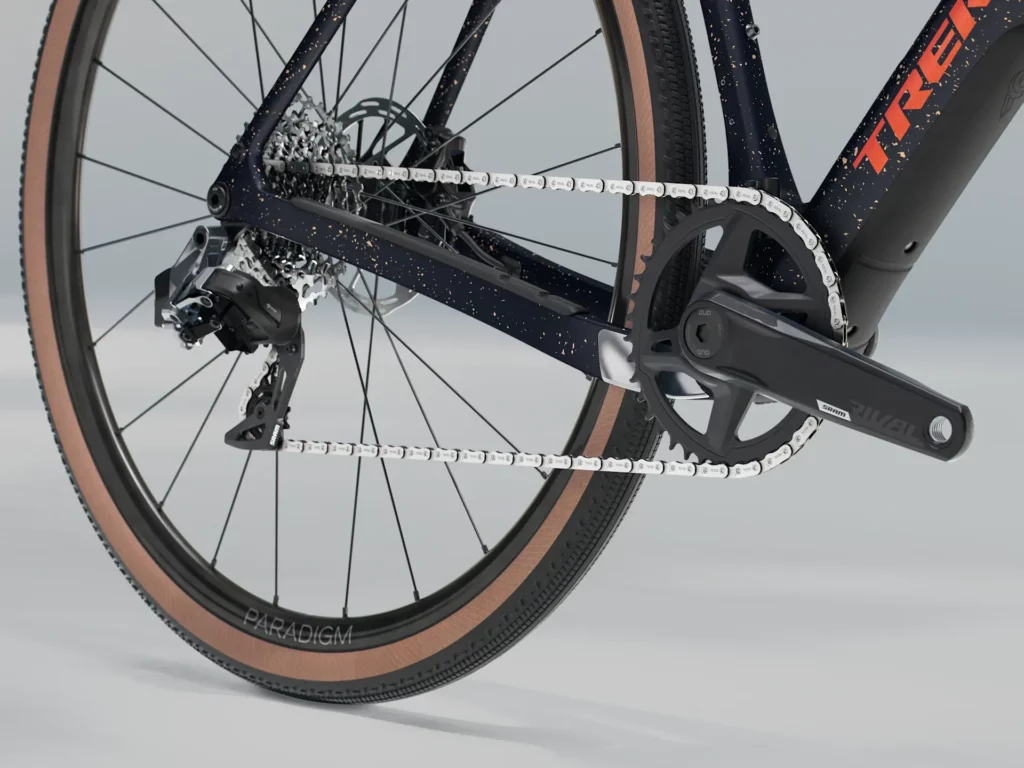
Bonus: Gravel, e-MTB & Wireless SetupsGravel, Wireless, and Wallet-Punishing Fancy Stuff
Gravel riders get their own toys now, too. Shimano GRX is on a few of our builds. It’s built tougher, the gearing actually makes sense off-road, and the brakes don’t have a meltdown if you hit mud. On the SRAM side, XPLR is the single-chainring option, all wireless. We’ve got one set up with a 10–44 cassette that’ll climb walls and still bomb down tarmac without spinning out.
And yes, for those who love weight-weenie bragging rights, we do stock bikes with Ultegra Di2 and even the occasional Dura-Ace setup. They’re stunning, flawless, and will definitely make you feel faster… even if your average speed hasn’t changed since 2019. SRAM Red AXS? Same deal: lighter, flashier, shinier. And yes, it’s in the catalogue if you want to go full dentist-spec.
MTB and e-MTB riders aren’t left out either. The wide-range cassettes are getting ridiculous with 10–51t monsters that look like dinner plates bolted to your wheel. We’ve got Shimano Deore and XT builds, plus SRAM GX Eagle kits on a few e-MTBs. They’re basically indestructible, which is handy since you will treat them badly.
At the end of the day, all the modern groupsets we sell like Shimano or SRAM, budget or baller, they just work. The real questions are: do you want cables, wires, or pure wireless vibes, and how much are you willing to pay to save a few hundred grams?
But let’s be honest, it isn’t just about the weight. Some riders want their bike to look as good as it rides. A polished Dura-Ace crank or that sleek SRAM Red AXS cassette isn’t just functional, it’s a statement piece. The same way some people drool over Ferraris or Aston Martins, plenty of cyclists love the aesthetic of a high-end groupset. And that’s fine because cycling isn’t always about being practical. Sometimes it’s about loving the machine you’re riding, even if you know the Claris-equipped bike in the corner would get you to the café just as well.
So yes, groupsets matter… just not as much as your legs. But if a shiny new 105 Di2 setup makes you ride more, or that wireless SRAM click makes you grin, then it matters a lot. Lucky for you, we’ve got everything from Claris workhorses to Di2 race machines right here, waiting for you to throw a leg over and decide for yourself.
FAQs: Shimano vs SRAM Groupsets
Q1: What is the Shimano groupset hierarchy?
Shimano’s road groupset hierarchy from highest to lowest is Dura-Ace, Ultegra, 105, Tiagra, Sora, and Claris. Each step up offers improved materials, smoother shifting, and reduced weight. Shimano also makes the GRX range for gravel bikes and Deore, XT, and XTR for mountain bikes.
Q2: What is the SRAM groupset hierarchy?
SRAM’s road groupset ranking is Red AXS, Force AXS, Rival AXS, and Apex. The “AXS” models are fully wireless, while Apex is available in both mechanical and electronic options. SRAM’s XPLR and Eagle groupsets are designed for gravel and mountain use.
Q3: Is SRAM better than Shimano?
Neither brand is strictly better – it depends on your riding style and preference. Shimano offers smoother, mechanical precision, while SRAM provides crisp, wireless shifting and lower maintenance. Riders who prefer traditional feel often choose Shimano, while tech-forward cyclists tend to favour SRAM’s AXS systems.
Q4: Do groupsets really matter?
Yes – but not as much as your legs! Higher-tier groupsets shift more smoothly and weigh less, but even entry-level Shimano and SRAM setups perform reliably. The right choice balances performance, budget, and what makes you enjoy riding more.